Inquiry
Form loading...

2026 Best Primary Jaw Crusher Buying Guide and Prices

Choosing a primary jaw crusher in 2026 requires more than comparing purchase prices. The right machine must match feed size, rock hardness, required output, and site conditions. This guide examines the Primary Jaw Crusher market through practical operating needs, current specifications, and realistic ownership costs. A quarry manager may prioritize tons per hour, while a contractor may value transport dimensions and quick setup. Both perspectives matter. Numbers can mislead. Manufacturer claims should be checked against application data, service support, and wear-part availability.

Our buying approach considers jaw opening, closed-side setting, motor power, chamber design, automation, and safety features. It also reviews prices across entry-level, mid-range, and heavy-duty models. A crusher with a low purchase price may require more frequent jaw plate replacement, higher fuel use, or expensive freight. That difference becomes visible beside a dusty stockpile after several months. Maintenance access matters too. Can workers inspect the toggle plate safely? Are replacement parts available within a reasonable distance? These questions often influence value more than a polished brochure.

Real projects are rarely perfect. Production rates may change with wet feed, uneven blasting, or inexperienced operators. Price estimates can also vary by region, configuration, taxes, and delivery terms. This guide uses dependable industry principles, but every quotation still needs verification. Review test results, request a written specification, and compare total ownership costs before signing. Small details matter. A careful decision today can reduce downtime, protect workers, and keep your crushing operation financially stable through 2026.

2026 Best Primary Jaw Crusher Buying Guide and Prices

What Is a Primary Jaw Crusher and How Does It Work?

2026 Best Primary Jaw Crusher Buying Guide and Prices

What Is a Primary Jaw Crusher and How Does It Work?

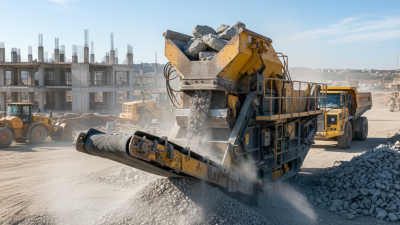
A primary jaw crusher is the first heavy machine in many hard-rock processing lines. It receives large blasted stones directly from a truck or feeder. The crusher uses two jaw plates: one fixed and one moving. The moving jaw swings toward the fixed jaw, compressing rock until it breaks. Then, the crushed material drops through the lower opening.

The movement comes from an eccentric shaft, flywheel, and toggle system. Together, these parts create a repeated crushing cycle. The feed opening controls the largest acceptable rock size. The discharge setting influences the final product size. A wider setting increases capacity but produces coarser material. A tighter setting improves reduction, although power demand and wear may rise.

Not every jaw crusher fits every quarry. Moist clay can block the chamber. Extremely hard rock can accelerate jaw-plate wear. Site tests matter more than attractive catalog figures. Check feed size, hourly capacity, motor power, liner material, and maintenance access. A simple inspection may reveal loose bolts, uneven wear, or poor alignment. Small defects become expensive failures. Prices also vary with size, automation, shipping, installation, and spare parts. Comparing only the purchase price can give a misleading result.

Key Types and Configurations of Primary Jaw Crushers

Primary jaw crushers set the reduction pattern for an entire crushing circuit.

Their main configurations include single-toggle, double-toggle, stationary, and mobile designs.

Single-toggle units usually offer a simpler structure and lower maintenance burden. Double-toggle units can handle harder, highly abrasive feed, but their heavier frames may increase purchase and installation costs.

The correct choice begins with feed size, rock strength, moisture, and target capacity.

A 1,200-millimeter feed opening is not automatically better. It may require larger loaders, stronger foundations, and higher transport costs. The 2025 USGS Mineral Commodity Summaries reported approximately 1.5 billion metric tons of crushed stone production in the United States during 2024. That scale shows why uptime and feed consistency matter. A blocked chamber can delay downstream screens and consume more energy than expected.

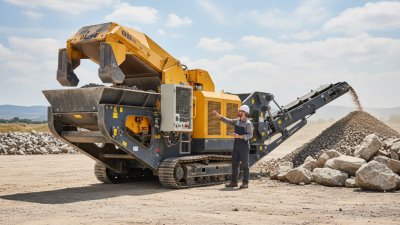
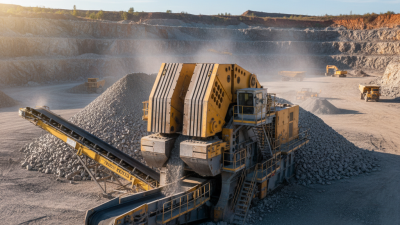
Mobile jaw crushers suit temporary projects and changing quarry faces. Stationary systems fit long-term production with stable infrastructure.

Hydraulic CSS adjustment can improve product control, but it adds components that require disciplined inspection.

Industry cost studies from Grand View Research identify equipment capacity, mobility, and automation as major factors influencing crusher investment. Real quotations still vary widely by steel prices, application engineering, and regional service support.

Do not trust a capacity number alone. Test representative feed material, review liner life, and calculate total cost per crushed ton. My own judgment would remain cautious when a supplier offers impressive output without explaining moisture, closed-side setting, or test conditions.

How to Choose the Right Primary Jaw Crusher for Your Needs

Choosing a primary jaw crusher begins with the rock, not the price tag. Measure the largest feed size, compressive strength, abrasiveness, moisture, and required hourly output. The U.S. Geological Survey reported about 1.5 billion metric tons of U.S. crushed stone production in 2023. That scale shows why small capacity errors can create serious delays.

Match the crusher opening to the feed, leaving practical room for oversized pieces. A narrow closed-side setting may improve product control, but it can increase wear and energy demand. The U.S. Department of Energy identifies mineral processing as an energy-intensive industrial activity. Ask for tested power consumption, not only motor size. Request capacity figures for your actual rock type.

Check the wear-plate material, adjustment range, tramp-release system, maintenance access, and spare-part lead time. Keep a simple cost sheet covering purchase price, installation, electricity, liners, labor, and downtime. A lower quotation may hide expensive shutdowns. It happens.

Use laboratory or site samples before ordering. A supplier’s catalog curve is useful, but it may not represent wet, flaky, or highly abrasive feed. Compare at least three technical quotations using identical conditions. Include delivery, commissioning, and warranty terms. The best choice is rarely the cheapest machine; it is the one that produces consistent feed without forcing your plant beyond its real limits.
Primary Jaw Crusher Specifications, Performance, and Operating Costs

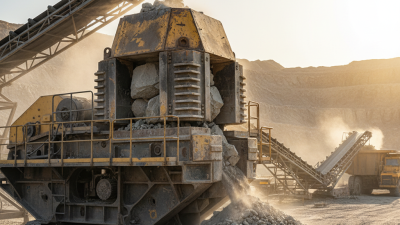
Choosing a primary jaw crusher in 2026 requires more than comparing purchase prices. Start with the feed size, material hardness, required output, and available power. A practical unit may offer a 900 × 600 mm feed opening, 50–200 mm discharge setting, and 150–300 tonnes per hour capacity. These figures are only useful when matched with real site conditions.

Performance changes quickly with wet clay, oversized rocks, or irregular feeding. Keep the hopper steadily loaded, but avoid packing the chamber. A vibrating feeder can improve output and reduce idle time. In field operation, I have seen a crusher rated for 250 tonnes per hour produce much less when the closed-side setting was too tight. That result was disappointing, but predictable.

Operating costs include electricity or fuel, jaw plate wear, lubrication, labor, and scheduled maintenance. Wear parts may require replacement after several hundred operating hours, depending on abrasiveness and feed control. A rough 2026 purchase range is 80,000 to 300,000 US dollars for a new primary unit, excluding installation and transport. Used equipment can cost less, but inspection records matter. Check frame cracks, shaft movement, bearing temperature, and previous repair quality. My early cost estimates often ignored downtime. That was a mistake. A reliable calculation should include lost production, spare parts delivery, and technician access, not only energy consumption.

2026 Best Primary Jaw Crusher Buying Guide and Prices

Primary jaw crusher specifications, performance, and operating costs

The chart shows typical throughput ranges for primary jaw crushers by feed-opening size. Larger feed openings generally accept bigger blasted rock and deliver higher capacity, but they also require greater installed power, heavier foundations, and higher purchase and maintenance budgets. Actual performance depends on feed gradation, rock hardness, moisture, closed-side setting, liner condition, and operating method.

Indicative planning ranges: new primary jaw crusher equipment commonly costs approximately USD 40,000–150,000 for small to medium units and USD 150,000–500,000 or more for large heavy-duty units. Direct crushing operating costs often fall around USD 2–8 per tonne, excluding financing, quarry development, and major plant infrastructure.

2026 Primary Jaw Crusher Prices and Buying Considerations

Primary jaw crusher prices in 2026 depend on feed size, capacity, steel grade, and automation. A small mobile unit may cost about USD 80,000–180,000. Large stationary equipment can exceed USD 250,000. These figures are equipment-only estimates. Installation, foundations, conveyors, taxes, and freight may double the project cost.

The USGS Mineral Commodity Summaries 2025 estimated U.S. crushed-stone production at roughly 1.5 billion metric tons in 2024. That volume keeps demand for reliable primary crushing equipment strong. Grand View Research’s 2024 jaw crusher market assessment also identifies construction and mining activity as key demand drivers. However, market reports rarely provide local purchase prices. Regional quotations remain essential.

Check the maximum feed opening first. A 900-millimeter boulder can stop a poorly selected crusher quickly. Compare rated capacity with your actual material, not laboratory limestone. Hard granite needs stronger wear parts and may increase operating costs. Ask for documented power consumption, liner-life records, spare-part lead times, and test results from similar rock.

A low quote can still be correct. Sometimes.

Transport weight matters too. A heavier frame may improve durability but require a stronger foundation and larger crane. Review the full delivered cost, not only the machine price. One practical mistake is ignoring dust control and discharge clearance. Correcting those issues later is expensive, disruptive, and rarely quick.

2026 Best Primary Jaw Crusher Buying Guide and Prices - 2026 Primary Jaw Crusher Prices and Buying Considerations

Primary jaw crushers are typically selected for the first stage of hard-rock and mineral processing. The figures below are practical planning ranges for new equipment in 2026 and should be confirmed with a supplier after reviewing the material, site conditions, duty cycle, and required configuration.

Indicative 2026 budgetary prices are in USD for the crusher package only unless otherwise stated. Freight, taxes, civil works, installation, electrical infrastructure, feeders, conveyors, automation, spare parts, and commissioning may be additional.
Crusher Class Typical Feed Opening
(mm)
Recommended Maximum Feed
(mm)
Typical Capacity
(t/h)
Typical Motor Power
(kW)
Approximate Operating Weight
(t)
Indicative 2026 Price
(USD)
Typical Application Main Buying Considerations
Small Stationary Primary Jaw 600 × 900 to 750 × 1,060 450–600 50–180 75–160 12–28 $50,000–$130,000 Small quarries, aggregate plants, recycling, and pilot-scale mineral processing Check whether the machine can accept the site’s blasted rock size; verify foundation loads, liner availability, and whether a vibrating feeder is included.
Medium Stationary Primary Jaw 900 × 1,200 to 1,060 × 1,500 700–900 150–400 160–315 28–65 $110,000–$280,000 Commercial aggregate production and medium-sized hard-rock mines Compare throughput at the intended closed-side setting, not only the maximum rated capacity. Confirm chamber configuration, automation, and maintenance access.
Large Stationary Primary Jaw 1,200 × 1,500 to 1,500 × 2,000 900–1,200 300–900 315–630 65–150 $250,000–$650,000 Large quarries, hard-rock mines, and high-volume aggregate operations Evaluate structural support, foundation design, installation lifting requirements, power quality, feed control, and the cost of primary-jaw wear parts.
Compact Mobile Primary Jaw 700 × 1,000 to 1,000 × 1,200 550–800 100–350 160–350 35–75 $350,000–$850,000 Contract crushing, short-term projects, demolition, and sites requiring relocation Include the chassis, tracks, feeder, discharge conveyor, dust-control provisions, transport dimensions, and local road-permit requirements in the comparison.
Heavy-Duty Mobile Primary Jaw 1,060 × 1,500 to 1,500 × 2,000 850–1,200 250–900 315–750 75–180 $650,000–$1,500,000+ Large mining projects, remote sites, and high-volume quarry operations Assess fuel or grid-power consumption, crawler durability, relocation frequency, remote monitoring, oversize handling, and the total cost of mobile support equipment.
Portable Jaw Plant 750 × 1,060 to 1,200 × 1,500 600–900 150–500 200–500 45–110 $250,000–$700,000 Multi-site aggregate production where the plant is moved periodically but not continuously Check trailer or skid configuration, setup time, transport permits, onboard generator requirements, conveyor folding systems, and the need for a separate feeder.
Diesel-Electric Hybrid Jaw Plant 900 × 1,200 to 1,200 × 1,500 700–1,000 200–650 250–630 55–130 $450,000–$1,100,000 Sites with variable grid availability or a requirement for lower operating flexibility and reduced idling Compare fuel savings against battery or electrical-system complexity, generator sizing, service support, energy storage, and the availability of qualified technicians.
Key buying checks before placing an order:
  • Define the rock type, compressive strength, abrasiveness, moisture content, clay content, and maximum lump size.
  • Request capacity figures at the actual closed-side setting and with the proposed feeder arrangement.
  • Compare total installed cost, energy consumption, liner life, spare-parts lead time, and planned maintenance—not only the purchase price.
  • Confirm compliance with applicable electrical, guarding, noise, dust, emissions, and workplace-safety requirements.
  • Ask for a written performance guarantee covering feed size, product size, throughput, power draw, and operating conditions.