How to Choose the Right Mining Jaw Crusher for Your Needs?
Choosing the right Mining Jaw Crusher is crucial for successful operations in the mining industry. An expert in the field, Dr. Mark Thompson, emphasizes, “Selecting the right crusher can significantly affect your production efficiency.” With numerous options available, it’s vital to understand your specific needs and the technical specifications of each model.
Mining Jaw Crushers vary greatly in size, power, and design. Understanding how these differences impact performance can be challenging. Factors such as the type of material, production capacity, and site conditions play a critical role in your choice. A mismatch can lead to operational inefficiencies, increased costs, and equipment failure.
Consider the long-term implications of your selection. A suitable Mining Jaw Crusher should not just meet immediate requirements but also adapt to future needs. Assessing the durability and serviceability of potential crushers is often overlooked. It's essential to reflect on your choices to avoid unnecessary expenses down the line. In this process, expert advice can be invaluable.
Understanding the Basics of Mining Jaw Crushers
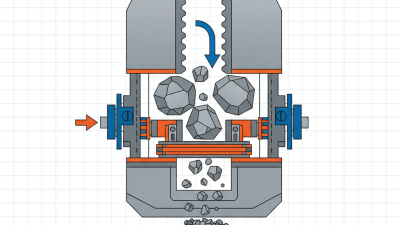
Mining jaw crushers play a crucial role in extracting minerals from the earth. Understanding their fundamentals is essential for making an informed choice. Jaw crushers are designed to reduce large rocks into smaller pieces for easier processing. These machines utilize compressive force to crush materials, and their operation is influenced by several key factors.
One such factor is the size of the feed material. According to a recent report by the International Journal of Mining Science, the ideal feed size for optimal efficiency is typically between 8-12 inches. Additionally, the material's abrasiveness can impact the wear on the crusher's components. High-abrasive materials will lead to more frequent maintenance and potentially higher operational costs. It is crucial for operators to assess their material characteristics.
Maintenance and operational costs are often overlooked. A study from Mining Weekly found that poor maintenance could increase operational costs by up to 30%. Regular inspections and timely replacements of wear parts can mitigate these expenses. This emphasizes the importance of reliability in machine selection. While it’s tempting to prioritize upfront costs, long-term efficiency and durability are often more valuable.
Key Factors to Consider When Selecting a Jaw Crusher
Choosing the right mining jaw crusher requires careful consideration of several key factors. First, assess the size and hardness of the materials you will be processing.
Different crushers perform better with specific types of materials. You may find that some models struggle with harder rocks, while others excel in processing softer ones.
Capacity is another crucial factor. Determine your desired output, measured in tons per hour. A crusher that meets your needs can enhance productivity. However, a machine that’s too large may lead to inefficiencies.
Tips: Consider the power source. Electric crushers are usually quieter and more efficient. However, diesel-powered ones can operate in remote areas.
Don’t overlook maintenance needs. Some crushers require more frequent service, leading to downtime. Assess the availability of spare parts and support, which can save you time and money in the long run.
Finally, always evaluate your budget. Cheaper options may lead to increased operational costs over time. Invest in a quality machine that serves your needs effectively. Balancing initial investment and long-term operations is essential for success in mining.
Types of Mining Jaw Crushers and Their Applications
When selecting a mining jaw crusher, understanding the types available is essential. Primary jaw crushers are typically used in hard rock mining. They can handle large, heavy materials with ease. These crushers use a compressive force, which means they apply pressure to break down materials. A well-suited option for high-strength materials, they deliver a reliable performance.
On the other hand, secondary jaw crushers are designed to process material that has already been reduced. They create smaller aggregates for various applications. These machines focus on producing a uniform output size. Users may also find that some models offer adjustable settings for finer control. The challenge lies in finding the right balance between size reduction efficiency and throughput rate.
Different applications may require unique features. Some mining operations may prioritize power consumption while others focus on mobility. The choice of a jaw crusher can often reflect the specific needs of the site. It’s essential to evaluate these factors thoroughly. Over time, it becomes clear that no solution is perfect. Each type of jaw crusher has its own advantages and limitations. This requires users to reflect on their operational goals consistently.
How to Choose the Right Mining Jaw Crusher for Your Needs? - Types of Mining Jaw Crushers and Their Applications
| Type of Mining Jaw Crusher |
Application |
Feed Size (mm) |
Output Size (mm) |
Production Capacity (tons/hour) |
Features |
| Single Toggle Jaw Crusher |
Primary crushing in mining and quarrying |
200-1200 |
10-105 |
60-250 |
Simplistic design, quick setup, low maintenance |
| Double Toggle Jaw Crusher |
Heavy-duty applications |
300-1500 |
15-300 |
100-600 |
Higher crushing capacity, well-suited for hard materials |
| Compact Jaw Crusher |
Small to medium-sized operations |
100-600 |
5-50 |
10-50 |
Space-saving, easy transport, efficient |
| Tracked Jaw Crusher |
On-site crushing for construction and demolition |
400-800 |
20-150 |
50-500 |
Mobility, versatility, high production rates |
| Stationary Jaw Crusher |
High-capacity stationary applications |
600-1200 |
10-250 |
200-1000 |
Durability, long service life, high efficiency |
Evaluating Performance Metrics for Mining Jaw Crushers
When choosing a mining jaw crusher, performance metrics play a crucial role. Start by assessing the crushing capacity. This metric indicates how much material the crusher can handle over a specific time period. Higher capacities often yield better efficiency. However, it’s essential to balance capacity with the desired product size. An optimal balance ensures less wasted material.
Next, consider the reduction ratio. This ratio shows how much the crusher can reduce the size of input material. A favorable reduction ratio can lead to more consistent output sizes. Yet, it’s critical to evaluate if the machinery can maintain this ratio under different operating conditions. Sometimes, as the material varies, so does the effectiveness of the crusher.
Durability and maintenance also matter. A robust design can withstand harsh mining environments. However, machinery needs upkeep to operate effectively and safely. Frequent breakdowns can slow production and increase costs. Always weigh the long-term investment against immediate needs. Reflecting on your operational goals will aid in making a well-informed choice.
Performance Metrics of Mining Jaw Crushers
Maintenance and Longevity Considerations for Your Crusher
When selecting a mining jaw crusher, maintenance and longevity are key factors. Regular maintenance is crucial for optimal performance. This includes checking the wear parts. Since wear can vary with different materials, understanding how your crusher operates is essential. For instance, daily greasing can keep components moving smoothly. Failing to maintain these elements may lead to costly downtimes.
Over time, even the best crushers show signs of wear. This is where proactive measures come into play. Consider using protective liners to reduce impact on the frame. These can significantly extend the life of your machinery. Additionally, it’s important to monitor the hydraulic systems regularly. A small leak can escalate into a major issue if not addressed promptly.
Balancing operational efficiency and maintenance can be challenging. Operators must be trained to recognize early signs of wear. Not everyone sees the subtle clues; thus, a culture of vigilance is vital. Investing in routine inspections can pay off in the long term. Overlooked details may lead to unexpected failures. As the mining industry evolves, so should maintenance practices.