Top Concrete Crusher Types for Effective Demolition and Recycling?
In the demolition and recycling industry, choosing the right equipment is crucial. Concrete crushers play a vital role in making these processes efficient. According to industry expert John Smith, “The right concrete crusher can make or break your project.” This highlights the importance of selecting an effective crusher tailored to specific needs.
Various types of concrete crushers exist, each designed for different applications. For example, jaw crushers are ideal for primary crushing, while impact crushers excel in material recycling. Understanding these distinctions can minimize delays in projects. However, not all concrete crushers are created equal. Some may not handle specific materials as well.
It's essential to consider these factors during equipment selection. The right choice can save not only time but also resources. On the other hand, a poor choice can lead to added costs and complications. An informed decision in selecting concrete crushers ultimately contributes to successful project outcomes.
Types of Concrete Crushers for Demolition Projects
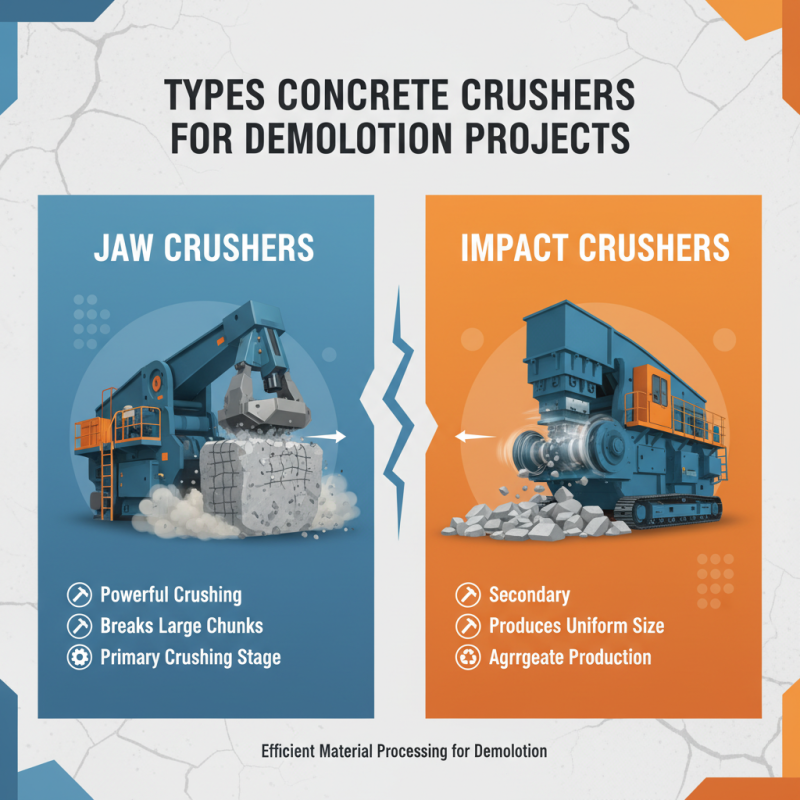
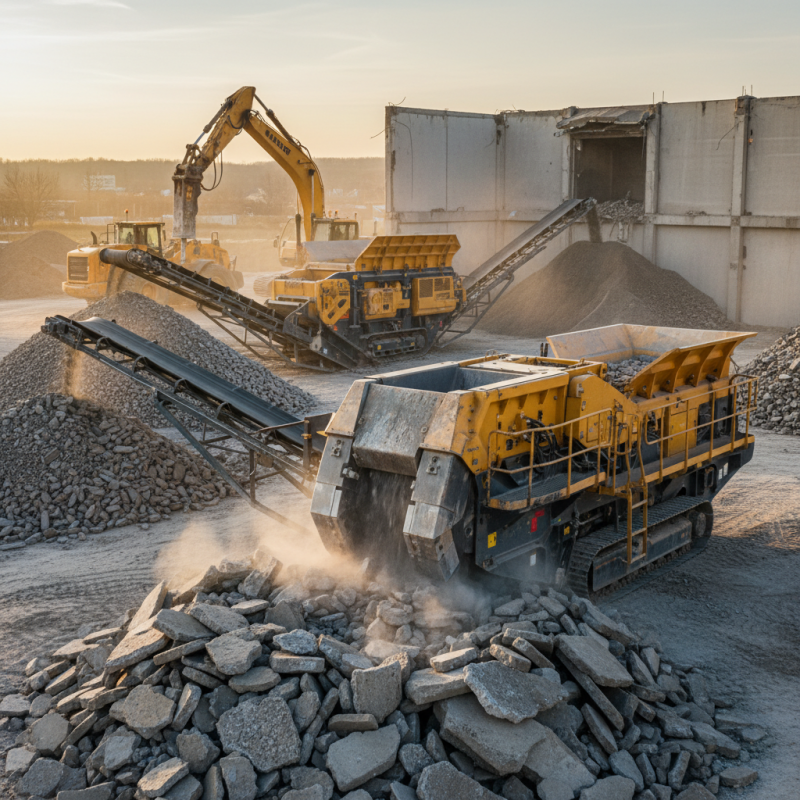
When choosing concrete crushers for demolition projects, understanding the types available is crucial. Jaw crushers, for instance, are known for their powerful crushing capabilities. They break down large concrete chunks with ease, making them ideal for heavy-duty tasks. These machines are often used in primary crushing stages, allowing for efficient material processing.
Another popular type is the impact crusher. This equipment works by striking the concrete with high-speed rotating hammers. It produces smaller, more uniform pieces, which are great for recycling. However, the efficiency can depend on the material's hardness. Sometimes, these crushers may struggle with reinforced concrete, requiring extra effort.
Cone crushers offer a different approach, using a rotating cone to crush materials. They are particularly effective for creating smaller aggregates. Yet, they may come with high operational costs that can be a drawback for some projects. Each type has its strengths and weaknesses, highlighting the importance of selecting the right equipment based on specific project needs. Thoughtful consideration can lead to more effective demolition and recycling outcomes.
Comparison of Primary and Secondary Concrete Crushers
Concrete crushers play a crucial role in demolition and recycling. When discussing primary and secondary concrete crushers, it’s essential to understand their distinct functions. Primary crushers, like jaw crushers, are designed for large, initial breaks. They can handle massive chunks, reducing them to manageable sizes. According to industry reports, primary crushers often achieve a reduction ratio of 4:1.
In contrast, secondary crushers refine the material further. These include impact crushers and cone crushers. They aim at achieving finer sizes and enhancing material purity. Research indicates that secondary crushers can create aggregate with a size as small as 0.5 inches. This step is vital for ensuring the recycled material meets quality standards for reuse in construction.
However, not all systems operate flawlessly. A common issue with primary crushers is their inability to handle rebar effectively. This can lead to additional processing steps. Similarly, secondary crushers might struggle with harder materials, causing wear and tear. Understanding these limitations helps in choosing the right equipment for a demolition project.
Top Concrete Crusher Types for Effective Demolition and Recycling
This chart compares various types of concrete crushers based on their effectiveness rating for demolition and recycling. The ratings, on a scale of 1 to 10, provide insight into how suitable each type of crusher is for these tasks.
Key Features to Consider When Choosing a Concrete Crusher
When selecting a concrete crusher, there are key features to consider. Size and weight greatly affect mobility and ease of transport. Smaller, lighter crushers provide flexibility for tight job sites. However, they may lack the power needed for large projects. Crush size is also crucial. Many machines allow for adjustable settings, enabling users to create specific aggregate sizes for recycling purposes. According to a report by the Construction Demolition Recycling Association, about 70% of concrete debris can be recycled effectively with the right equipment.
Power source is vital as well. Electric crushers usually offer lower operational costs. Yet, hydraulic options provide greater power for larger workloads. A report from the Environmental Protection Agency highlighted that choosing energy-efficient models not only cuts costs but also minimizes environmental impact. Manufacturers are focusing on sustainability, with over 35% of new models incorporating eco-friendly features.
Maintenance should not be overlooked. Regular inspections can prevent breakdowns and ensure safety during operations. Some models may require frequent part replacements, which can lead to unexpected costs. Operators must weigh the initial investment against potential long-term expenses. Understanding these features and their implications can greatly improve the efficiency of demolition and recycling projects.
Advantages of Using Concrete Crushers in Recycling Operations
Concrete crushers play a vital role in recycling operations, significantly enhancing efficiency and sustainability. According to industry reports, approximately 60% of construction and demolition waste is concrete. Utilizing concrete crushers helps divert a considerable amount of this material from landfills. The crushed concrete can then be reused as aggregate for new construction projects, reducing the need for virgin materials.
The advantages of using concrete crushers are clear. They not only minimize waste but also lower transportation costs, as the crushed material can often be reused on-site. A report from the Environmental Protection Agency indicates that recycling concrete can save up to 1,500 pounds of CO2 emissions per ton compared to landfill disposal. Moreover, by investing in mobile concrete crushers, companies can operate in various locations. They can streamline the recycling process and adapt to different project needs.
However, it is essential to recognize some challenges in these operations. Not all concrete is suitable for recycling, especially if it contains contaminants. The efficiency of crushers can vary, and maintenance is crucial for optimal performance. Industry experts recommend regular inspections to ensure that crushers are functioning correctly. Overlooking these aspects may limit the effectiveness of recycling initiatives, underscoring the importance of continuous improvement in concrete recycling practices.
Top Concrete Crusher Types for Effective Demolition and Recycling
| Concrete Crusher Type |
Advantages |
Suitable Applications |
Recycling Efficiency (%) |
| Jaw Crusher |
High crushing ratio, simple structure |
Construction sites, demolition projects |
85 |
| Impact Crusher |
Versatile applications, efficient for medium hardness |
Recycling, aggregate production |
90 |
| Cone Crusher |
High efficiency, produces quality aggregate |
Concrete recycling, quarrying |
88 |
| Mobile Crusher |
Flexible movement, on-site processing |
Where space is limited, dynamic projects |
92 |
| Hammer Mill |
Effective for smaller concrete pieces |
Lab testing, small-scale recycling |
80 |
Best Practices for Operating Concrete Crushers Efficiently
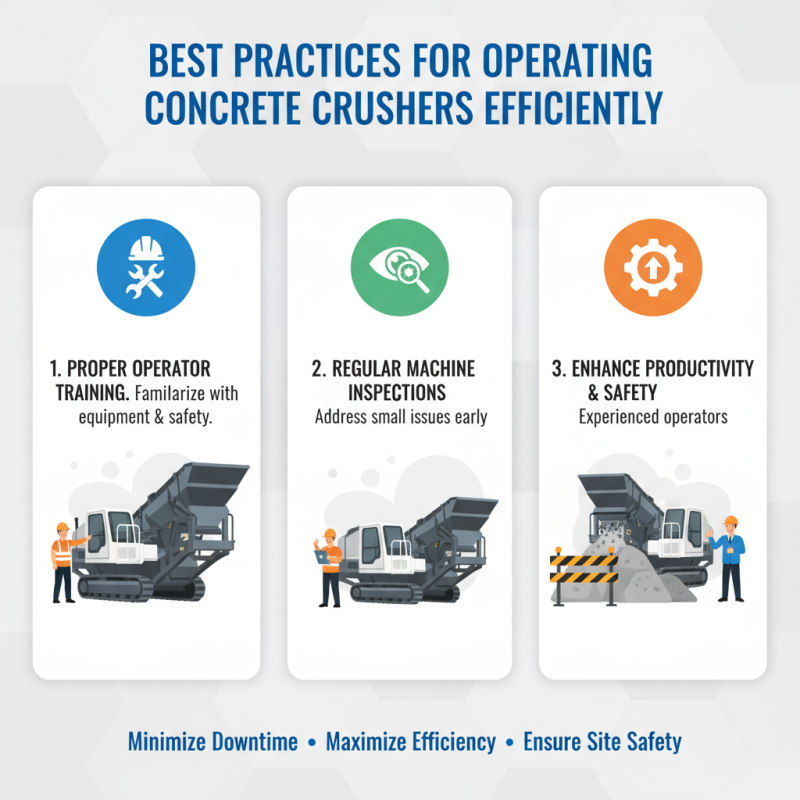
Operating concrete crushers effectively requires a clear understanding of best practices. Begin with proper training for operators. Familiarize them with the equipment's functions and safety features. An experienced operator can enhance productivity and ensure safety on site. It’s important to conduct regular inspections of the machinery. Small issues can lead to significant downtime if left unaddressed.
Using the right type of crusher is crucial for efficiency. Different projects may require specific crusher types. For instance, jaw crushers are ideal for large blocks of concrete, while impact crushers work well for smaller pieces. Adjust your approach based on material types and site conditions.
Moreover, maintaining optimal feeding techniques can improve crusher performance. Avoid overfeeding, as it can cause jams and unnecessary wear. Instead, keep a steady flow of material to maintain consistent operation. Regularly track productivity metrics. Awareness of operational challenges can help identify areas for improvement. Each site presents unique factors. Regular evaluations can lead to better long-term strategies.