2025 How to Effectively Use Quartz Crushers for Optimal Performance
Quartz crushers play a pivotal role in the mining and mineral processing industry, serving as essential tools for the extraction and refinement of quartz materials. The efficiency and effectiveness of these machines can significantly impact production rates and overall profitability. Therefore, understanding how to effectively use quartz crushers to their fullest potential is crucial for operators and industry professionals alike.
In this article, we will explore key strategies and best practices for optimizing quartz crusher performance. From selecting the right type of crusher to adjusting operational parameters and maintenance routines, each element contributes to achieving maximum efficiency. By implementing these techniques, users can ensure that their quartz crushing processes yield high-quality materials while minimizing downtime and operational costs.
As the demand for quartz continues to grow across various industries—including construction, electronics, and glass manufacturing—mastering the use of quartz crushers becomes increasingly important. This guide aims to equip readers with the knowledge necessary to enhance their quartz crushing operations, ultimately leading to better results and a more sustainable approach to resource management.

Understanding Quartz Crushers: Types and Mechanisms
Quartz crushers are essential tools in the mining and construction industries, designed specifically for reducing quartz into smaller, more manageable particles.
There are various types of quartz crushers, each operating on distinct mechanisms tailored to specific processing needs.
For instance, jaw crushers utilize a compressive force to break down quartz by squeezing it between two plates, allowing for significant size reduction.
On the other hand, cone crushers use a rotational motion to crush quartz, which provides a more consistent particle size and is effective for secondary crushing processes.
Understanding the mechanisms behind these quartz crushers is crucial for optimizing their performance.
Impact crushers, for example, employ high-speed impact forces to shatter quartz. This method is effective for creating fine granules ideal for various applications.
Additionally, employing a combination of different crusher types can enhance efficiency and produce a wider range of particle sizes, catering to diverse project requirements.
By mastering the unique characteristics and operations of each crusher type, users can maximize output and ensure that they select the appropriate equipment for their specific processing requirements.
Key Factors Influencing the Performance of Quartz Crushers
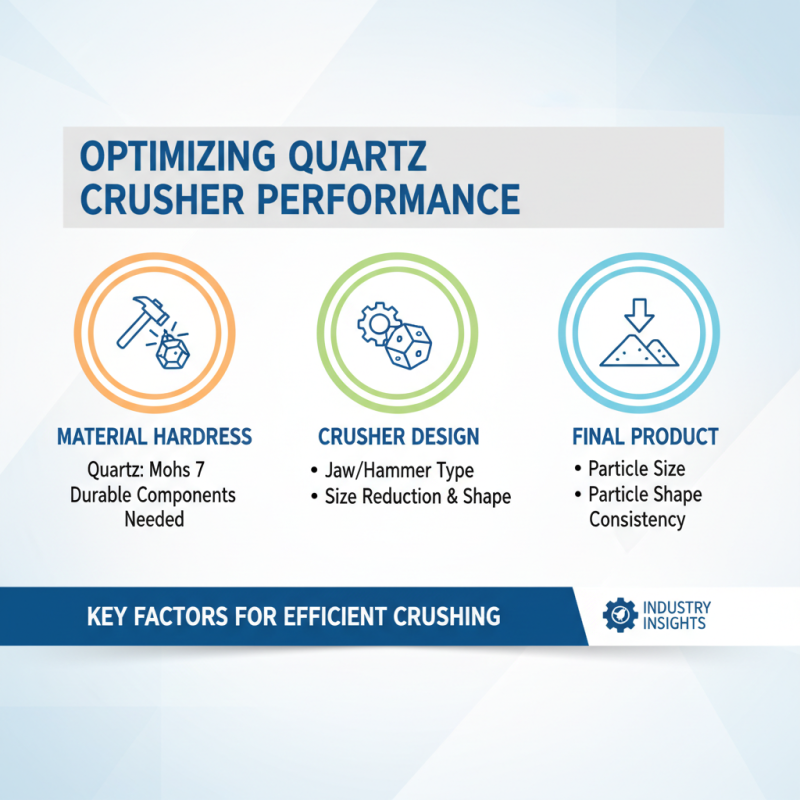
When utilizing quartz crushers, several key factors can significantly influence their performance and efficiency. One of the most critical aspects is the material hardness. According to industry reports, quartz has a Mohs hardness rating of 7, which means effective crushers must be equipped with durable components to withstand the wear and tear. Furthermore, the design of the crusher, including the type of jaws or hammers used, plays a vital role in determining the size reduction ratio and particle shape of the final product.
Another important factor influencing performance is the operational parameters, such as feed size, speed, and the presence of moisture in the quartz material. Studies indicate that optimizing these parameters can enhance the crushing efficiency by up to 30%. For instance, maintaining a consistent feed size can prevent overloading, leading to smoother operations and prolonging the lifespan of the equipment.
**Tips:** When setting up your quartz crusher, ensure the feed material is pre-screened and consider using a moisture control system. Regular maintenance checks can also help identify wear and replaceable parts, boosting the overall performance of your equipment. Adopting these practices not only enhances efficiency but also reduces operational costs in the long run.
Best Practices for Operating Quartz Crushers Efficiently
Operating quartz crushers efficiently is critical for maximizing output and ensuring operational longevity. According to a report by the U.S. Geological Survey, the production of crushed stone, including quartz, reached approximately 1.5 billion metric tons in 2020, highlighting the significant demand for effective crushing processes. To optimize performance, operators should focus on the selection of suitable equipment, regular maintenance, and precise feeding techniques. It is recommended that operators maintain the crusher's settings to reduce wear and prevent material buildup, which can lead to downtime and costly repairs.
Moreover, an effective quartz crushing operation should incorporate advanced monitoring systems to track performance metrics such as power consumption and throughput rates. Industry research suggests that implementing automated control systems can improve productivity by up to 20%, offering real-time adjustments based on operational conditions. Additionally, utilizing pre-screening techniques can help remove undesirable materials before they enter the crushing chamber, leading to improved efficiency and reduced wear on the equipment. By integrating these best practices, quartz mining operations can achieve optimal performance and sustainability in their processes.
Maintenance and Care Tips for Optimal Quartz Crusher Functionality
Maintaining quartz crushers is essential for ensuring their optimal functionality and longevity. Regular inspections should be carried out to identify any signs of wear and tear. Checking components like the crushing chamber, rotors, and screen mesh for damage can prevent small issues from escalating into major breakdowns. Additionally, keeping the machine clean from dust and debris is crucial, as accumulation can hinder performance and reduce efficiency.
Lubrication plays a vital role in the maintenance of quartz crushers. Ensure that all moving parts are adequately lubricated to facilitate smooth operation and minimize friction. It’s important to use the appropriate type of lubricant recommended for the machinery to avoid any potential damage. Furthermore, operators should follow a scheduled maintenance routine that includes replacing worn-out parts and adjusting settings to align with optimal performance standards. By implementing these care strategies, quartz crushers can operate efficiently, ultimately leading to improved productivity and reduced operational costs.
Quartz Crusher Performance Metrics
This chart illustrates the performance metrics of quartz crushers, highlighting efficiency, maintenance costs, durability, and overall performance rating. Regular maintenance and optimal usage can significantly enhance these metrics.
Safety Precautions During Quartz Crushing Operations
When operating quartz crushers, ensuring safety is paramount to prevent accidents and injuries in the workplace. Proper training for all personnel involved in the crushing operations is essential. Workers should be familiar with the machinery's operating procedures, potential hazards, and emergency protocols. Personal protective equipment (PPE) such as helmets, gloves, goggles, and dust masks should be mandatory to safeguard against injuries associated with falling debris and silica dust inhalation.
In addition to PPE, regular maintenance and inspection of the crushing equipment are crucial. Machinery should be checked for any wear and tear, and any detected issues must be addressed immediately to avoid malfunctions that could lead to accidents. Establishing a clear communication channel among team members can also enhance safety during operations. This includes using hand signals or radios, especially in noisy environments, to ensure all personnel are aware of their surroundings and can report any unsafe conditions promptly. By prioritizing these safety precautions, quartz crushing operations can be conducted efficiently while minimizing risks to workers.
2025 How to Effectively Use Quartz Crushers for Optimal Performance - Safety Precautions During Quartz Crushing Operations
| Aspect |
Details |
| Max Feed Size |
200 mm |
| Recommended RPM |
600 - 900 RPM |
| Maintenance Frequency |
Every 500 hours of operation |
| Common Safety Gear |
Safety goggles, gloves, helmets |
| Dust Control Methods |
Water spray, dust suppressants |
| Emergency Shutdown Procedures |
Quick release handles, emergency brakes |
| Training Requirements |
Certified training for operators, safety training courses |
| Performance Monitoring |
Regular checks on output quality and equipment efficiency |