Essential Tips for Choosing the Right Mining Jaw Crusher?
Choosing the right Mining Jaw Crusher is crucial for any operation. It can influence productivity and efficiency significantly. According to industry expert Dr. Emily Hudson, "Selecting the right crusher can be the difference between success and failure in mining operations."
Mining Jaw Crushers come in various sizes and designs. Each type serves a unique function. It's not enough to just choose a popular model. Understanding the specific needs of your mining site is essential. Many businesses overlook crucial factors. These include material type, size, and desired output.
Furthermore, the importance of quality cannot be ignored. Investing in a reliable Mining Jaw Crusher pays off in the long run. Regular maintenance and performance monitoring are equally important. These aspects are often neglected, leading to costly breakdowns. Ultimately, thoughtful consideration in your choice can lead to substantial long-term benefits.
Understanding Different Types of Mining Jaw Crushers and Their Applications
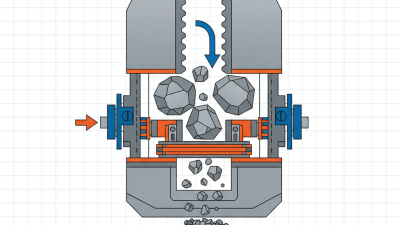
Choosing the right mining jaw crusher requires an understanding of various types and their applications. Jaw crushers are essential for crushing materials in mining operations. There are different configurations available, each suited for specific tasks. For example, primary jaw crushers handle larger rocks, while secondary crushers manage smaller, processed materials. According to a report by Research and Markets, the global jaw crusher market is projected to grow significantly, reaching a value of $1.83 billion by 2026.
Different types of mining jaw crushers exist, including single-toggle and double-toggle models. Single-toggle crushers are known for their simplicity and ease of maintenance. In contrast, double-toggle models handle harder materials more efficiently. Selecting the right type hinges on understanding material characteristics. A Comprehensive study from Industry Research found that hardness levels can affect the crusher's performance and lifespan.
Understanding the operational environment is crucial. Factors like material size, moisture, and abrasiveness directly impact crusher efficiency. For instance, high moisture content can lead to uneven wear and reduced output. It’s essential to conduct feasibility studies to ensure appropriate equipment selection. Many mines face challenges due to inadequate analysis, which can lead to frequent breakdowns and increased costs. Hence, thorough research and testing are vital for optimal performance.
Essential Tips for Choosing the Right Mining Jaw Crusher
| Type of Jaw Crusher |
Application |
Feed Size (mm) |
Output Size (mm) |
Capacity (tph) |
Power (kW) |
| Single Toggle Jaw Crusher |
Primary crushing |
150-1000 |
10-300 |
50-800 |
75-220 |
| Double Toggle Jaw Crusher |
Secondary crushing |
200-1200 |
20-350 |
100-1500 |
110-350 |
| Jaw Crusher with Hydraulic Adjustment |
Recycling and demolition |
300-1500 |
30-400 |
150-2000 |
160-400 |
| Small Laboratory Jaw Crusher |
Research and development |
50-200 |
5-50 |
10-100 |
5-15 |
Key Technical Specifications to Consider When Selecting a Jaw Crusher
When selecting a mining jaw crusher, various technical specifications should be thoroughly evaluated. First, consider the crusher's capacity. According to industry reports, the capacity typically ranges from 1 to 2000 tons per hour, depending on the model and settings. Understanding the expected output can significantly influence operational efficiency. A model that matches your production needs leads to better profitability.
Another crucial specification is the feed size. The feed opening can vary widely among different models. Feed openings often range from 400 mm to over 1000 mm. An inappropriate size may result in bottlenecks or inefficiencies during processing. Additionally, the crusher's toggle plate and jaw profiles impact the reduction ratio and product size. Well-designed components enhance overall performance and durability.
It's important to also examine the material quality. Jaw crushers made from high-strength steel provide better longevity. Reports indicate that wear parts' quality can affect maintenance costs by over 30%. Regular analysis of these components can lead to informed decisions, preventing future financial strain. Attention to detail is essential, as flaws in initial selection can have lasting repercussions.
Evaluating Performance Metrics: Throughput, Power Consumption, and Efficiency
When selecting a mining jaw crusher, performance metrics play a crucial role. Understanding throughput is essential. A well-performing jaw crusher can achieve a throughput of up to 1,000 tons per hour. This means a facility can significantly increase productivity over time. However, factors like material hardness and crusher settings can influence these numbers. Adjusting the jaw gap can maximize throughput but may require careful monitoring.
Power consumption is another critical aspect. Efficient crushers consume less energy while maintaining high productivity. Studies suggest that an energy-efficient model can operate with a power consumption rate as low as 0.5 kWh per ton. This not only reduces operational costs but also minimizes environmental impact. Evaluating power metrics during selection is vital to ensuring long-term sustainability.
Efficiency encompasses both throughput and power metrics. A crusher that operates with high efficiency often has a longer lifespan and lower maintenance costs. Research indicates that an efficient jaw crusher can minimize wear by 15%. Regular assessments of these performance metrics are important. This helps identify potential improvements and ensures the equipment remains competitive in the market. Potential pitfalls exist if these metrics are overlooked, leading to unexpected downtime or increased operating expenses.
Importance of Material Selection and Crusher Durability in Mining Operations
Choosing the right mining jaw crusher involves careful consideration of material selection and durability. These factors are crucial for ensuring optimal performance in harsh mining environments. The right materials can significantly enhance the crusher's lifespan and efficiency. Steel alloys, for instance, provide excellent toughness. However, the balance between hardness and ductility is often hard to achieve.
Durability is not merely about material composition. It also hinges on design and engineering principles. Crushers that are well-engineered tend to withstand the rigors of continuous operation. Many jaw crushers face failures due to thermal fatigue or wear under severe conditions. Selecting a model with robust features can prevent these issues.
Investors often overlook the importance of maintenance in the durability equation. Proper maintenance can extend the operational life of a crusher significantly. Regular inspections and timely part replacements may seem tedious but yield benefits in reliability. Balancing initial costs with long-term durability requires a thoughtful approach. Many decisions can lead to regrets, especially when overlooked factors cause breakdowns.
Cost-Benefit Analysis: Initial Investment vs. Long-term Operational Costs
When selecting a mining jaw crusher, understanding the cost-benefit analysis is crucial. The initial investment in high-quality equipment can be significant. Figures suggest that a robust jaw crusher may cost between $100,000 to $300,000. However, this upfront cost often pays off in the long run. A well-built crusher can last over a decade, providing valuable service in harsh mining environments.
Long-term operational costs also need consideration. Maintenance plays a critical role in total expenditures. Data from industry reports indicate that poor maintenance can lead to costs exceeding 20% of the initial purchase price each year. Conversely, regular maintenance ensures optimal performance and extends lifespan, potentially saving thousands in repairs and downtime.
Moreover, energy efficiency is a growing concern. Manufacturers are increasingly focusing on minimizing operational costs through advanced technology. Crushers that feature improved energy efficiency can reduce power consumption by up to 30%. This can lead to significant savings over time, particularly in large-scale operations. Reflecting on these factors can guide stakeholders in making informed decisions.
Cost-Benefit Analysis of Mining Jaw Crushers
This chart provides a cost-benefit analysis of investing in a mining jaw crusher, comparing the initial investment against operating costs over the first five years. It clearly illustrates the financial outlay required at the beginning and the ongoing expenses that will accumulate annually.