Inquiry
Form loading...

Why Choose a Quartz Crusher for Efficient Processing?

Choosing a Quartz Crusher is a practical decision for plants handling hard, abrasive quartz rock. The right machine can reduce large feed into consistent material for glass, engineered stone, construction sand, or silicon production. It also helps operators control product size, energy use, and maintenance costs.

Dr. Barry A. Wills, a respected mineral-processing author, states, “The aim of mineral processing is to separate valuable minerals from waste.” This principle explains why crusher selection matters. A jaw crusher can handle primary reduction, while a cone crusher may produce a finer, more uniform output. In a real plant, the difference appears clearly: correctly adjusted liners create stable particles, while worn liners produce uneven sizes and unnecessary recirculation.

Quartz is unforgiving. Its high hardness and abrasive structure can quickly wear manganese parts, create heat, and increase downtime. A reliable Quartz Crusher should therefore match the feed size, moisture level, required capacity, and final grading. Dust suppression and enclosed transfer points also deserve attention, especially near workers and finished-product storage.

There is no perfect setup.

Even experienced operators may need several trials before finding the best closed-side setting. Excessive reduction can waste power. Insufficient reduction can overload the screening circuit. Regular inspections, measured vibration, and recorded wear patterns provide stronger evidence than assumptions.

Efficiency is not only about crushing faster. It means producing the required material with fewer interruptions, controlled dust, predictable maintenance, and responsible energy consumption. That balance makes the Quartz Crusher a valuable part of a dependable processing line.
Why Choose a Quartz Crusher for Efficient Processing?

What Is a Quartz Crusher and How Does It Work?

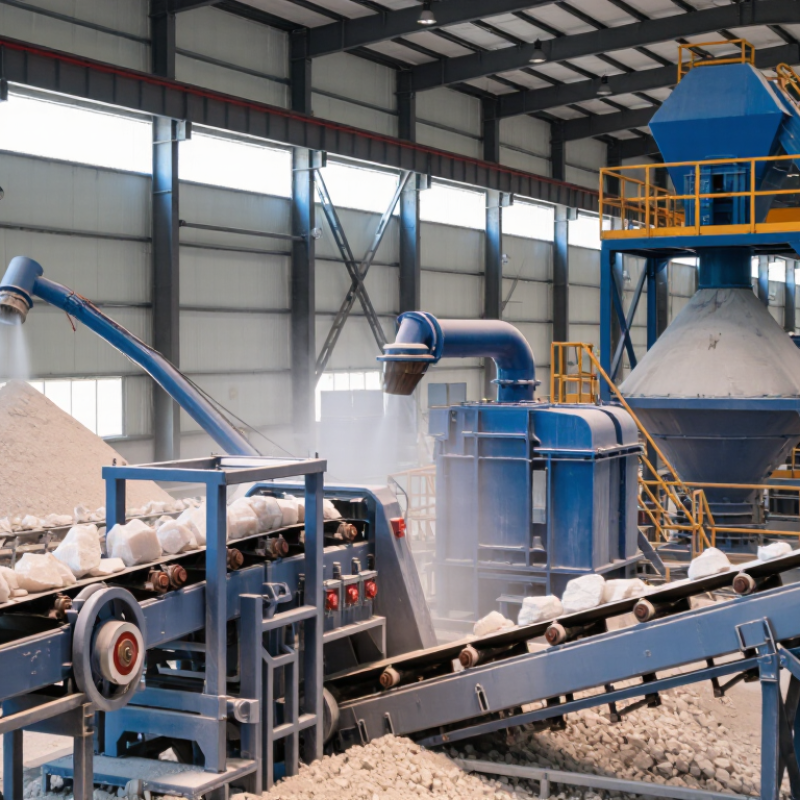
A quartz crusher reduces hard quartz rock into controlled particles for glass, engineered stone, silicon, and construction materials. The process begins when a feeder delivers material into a primary jaw crusher. Its movable plate compresses the rock against a fixed plate, creating smaller fragments. A secondary cone or impact crusher then improves size control. Screens separate finished particles from oversize material, which returns for another pass.

The USGS Mineral Commodity Summaries 2024 reported about 110 million metric tons of U.S. industrial sand and gravel production in 2023. This scale shows why consistent crushing matters. Quartz is abrasive and often produces excessive fines when settings are too tight. Careful gap adjustment, staged crushing, and wear monitoring can reduce waste. Not every site needs the same machine.

In practice, operators inspect feed size, moisture, hardness, and target grading before choosing equipment. Compression crushing usually suits larger, blocky feed.

Impact crushing can create a more cubical product, but it may increase wear. A practical test run remains valuable. Laboratory results can miss real dust, vibration, and uneven feeding. The wrong setting can look efficient briefly, then raise energy use and maintenance costs.


Why Is Quartz Crushing Important for Efficient Processing?

Quartz crushing is important because it controls every later processing stage. A well-sized feed improves screening, washing, grinding, and material separation. It also reduces blockages caused by irregular quartz pieces. The U.S. Geological Survey’s Mineral Commodity Summaries 2024 estimated U.S. industrial sand and gravel production at about 100 million metric tons in 2023. At this scale, small losses in crushing efficiency can become significant operating costs.

A quartz crusher applies controlled force to create a more consistent particle size. This consistency helps downstream equipment maintain stable capacity. It can also reduce unnecessary re-crushing and limit excessive fines. The Coalition for Eco Efficient Comminution reports that comminution may consume roughly 3–4% of global electricity. Crushing is only one part of that energy demand, but better feed preparation can still lower avoidable consumption. Moisture, quartz hardness, and feed shape must be checked before selecting equipment.

The practical details matter. Operators should monitor discharge size, vibration, dust, and liner wear during each shift. A crusher that produces uniform particles may perform better than a larger machine with higher nominal capacity. Bigger is not always better. In real plants, settings are sometimes adjusted too aggressively. This can increase fines, heat, and maintenance frequency. The better approach combines laboratory testing, measured production data, and regular inspection. No calculation replaces site experience. There is always room to question the first design assumption.

Why Choose a Quartz Crusher for Efficient Processing? - Why Is Quartz Crushing Important for Efficient Processing?

Processing Dimension Typical Quartz Characteristic or Operating Range Why It Matters for Efficient Processing Recommended Crusher Consideration
Mineral hardness Quartz has a Mohs hardness of approximately 7. Hard feed material requires substantial crushing force and can accelerate wear on liners, jaw plates, mantles, and blow bars. Use a robust crushing chamber and wear-resistant components suited to hard, abrasive rock.
Bulk density Solid quartz has a density of approximately 2.65 g/cm³; loose bulk density is lower and depends on particle size and moisture. Density affects feeder loading, stockpile volume, transport weight, and crusher throughput calculations. Size the feeder, crusher, conveyors, and storage areas according to the measured bulk density of the actual feed.
Primary size reduction Jaw crushers commonly reduce large quarried rock in the primary stage; typical reduction ratios are about 4:1 to 6:1, depending on feed and product settings. Primary crushing creates a manageable, more uniform feed for secondary and tertiary equipment. Choose a jaw crusher with an appropriate feed opening, stroke, and closed-side setting for the target product.
Secondary crushing Cone crushers commonly provide reduction ratios of roughly 3:1 to 5:1 in secondary applications. Controlled compression crushing can produce a consistent intermediate product while limiting unnecessary fines. Use a cone configuration that matches the quartz abrasiveness, required capacity, and desired product grading.
Fine shaping and cubical product Vertical-shaft impact crushing is often used when particle shape and manufactured-sand quality are important. Impact action can improve particle shape and generate finer fractions, but abrasive quartz may increase wear and energy demand. Use impact crushing selectively, with suitable wear parts and operating settings for the required fines content.
Moisture and fines control Moisture content varies by deposit and weather conditions; wet, clay-bearing feed can reduce screening and feeding efficiency. Sticky material may cause blockages, buildup, and unstable throughput even when the crusher itself has adequate power. Consider scalping, pre-screening, material separation, or controlled feed moisture before crushing.
Particle-size specification Common products may include coarse aggregate, fine aggregate, manufactured sand, or industrial quartz feed; the required sizes vary by application. A clearly defined product curve prevents over-crushing and reduces recirculation, energy use, and wear. Select the crusher type, chamber profile, screen aperture, and closed-side setting around the final grading target.
Energy efficiency Actual energy consumption depends on hardness, feed size, reduction ratio, moisture, crusher design, and circuit configuration. Efficient size reduction avoids producing particles finer than the specification and reduces the load on downstream equipment. Use staged crushing, stable feed control, correct liner settings, and closed-circuit screening where appropriate.
Wear management Quartz is highly abrasive because of its hardness and silica content. Excessive wear can change the crushing chamber profile, increase product variability, and raise maintenance frequency. Monitor wear-part thickness, power draw, product shape, and discharge grading; replace components before performance declines sharply.
Dust control Crushing and screening dry quartz can generate respirable crystalline silica-containing dust. Airborne dust presents an occupational health hazard and can reduce visibility and housekeeping quality. Use enclosure, local exhaust ventilation, water suppression where suitable, and a site-specific exposure-control program.
Circuit efficiency A multi-stage circuit typically combines primary crushing, secondary or tertiary crushing, and screening. Staged reduction distributes workload and allows each machine to operate closer to its intended duty. Balance crusher capacity with screen capacity, conveyor capacity, and recirculating-load requirements.
Quality consistency Product quality is influenced by feed geology, crusher settings, liner condition, screening, and moisture. Stable particle size and shape are important for concrete aggregate, road base, glass feed, and other quartz applications. Regularly sample feed and product, then adjust settings using measured gradation rather than visual inspection alone.

Note: Values shown are typical engineering ranges or generally accepted material properties. Actual performance depends on the quartz deposit, feed gradation, moisture, equipment configuration, operating settings, and required product specification.

Which Quartz Crusher Types Suit Different Processing Stages?

Quartz crushing works best when each machine matches the feed size and processing stage. A jaw crusher suits primary reduction because it accepts large, irregular quartz blocks. Its slow compression action also limits unnecessary fines. The U.S. Geological Survey reported nearly 100 million metric tons of industrial sand and gravel production in the United States during 2023, showing the scale of demand for controlled mineral processing.

Cone crushers are suitable for secondary and tertiary stages. They compress quartz repeatedly and produce a more consistent size for screening or grinding. A smaller closed-side setting can improve product control, but it may increase energy use and liner wear. The 2024 USGS Mineral Commodity Summaries also noted strong demand for high-purity silica in glass, foundry, and specialty applications. Purity matters here.

Impact crushers can refine particle shape during the final stage. They work well when cubical particles are preferred, especially for engineered aggregates. However, very abrasive quartz can accelerate wear. That detail is easy to overlook. The European Commission’s Best Available Techniques reference documents emphasize process control, dust reduction, and energy efficiency in mineral operations. In field applications, operators should test moisture, hardness, feed size, and desired product grading before choosing a crusher. A perfect flow sheet rarely survives real rock conditions.

How Does a Quartz Crusher Improve Efficiency and Product Quality?

A quartz crusher improves efficiency by controlling feed size, reduction ratio, and product shape. Hard quartz demands stable crushing pressure and well-selected wear parts. In field operations, a properly adjusted closed circuit reduces oversized particles and limits repeated crushing. This can lower energy use and prevent unnecessary equipment wear.

The U.S. Geological Survey’s Mineral Commodity Summaries 2024 estimated U.S. industrial sand and gravel production at about 97 million metric tons in 2023. Much of this material requires consistent sizing and low contamination. A quartz crusher supports that target through controlled discharge settings, screening, and regular calibration. Smaller size variation helps downstream mills operate more steadily. It can also improve finished sand quality by reducing flaky particles and unwanted fines. However, performance depends strongly on moisture, feed cleanliness, and operator decisions. No crusher is perfect. Real sites often reveal gaps that laboratory tests miss.

Tips: Measure feed and product size every shift. Keep moisture records beside the crusher. Inspect liners before quality declines. A practical target is not maximum throughput alone. It is stable throughput with fewer recirculated loads. Measure it. Adjust gradually. The U.S. Geological Survey also notes that industrial sand quality depends on factors such as grain size, purity, and physical durability, making process control essential.

Why Choose a Quartz Crusher for Efficient Processing?

Quartz is hard and abrasive, so a staged crushing circuit is commonly used to reduce oversize material efficiently while improving control of the final particle size.

The chart shows representative size-reduction ranges for a quartz processing circuit. Primary jaw crushing handles large feed, secondary cone crushing produces a more uniform intermediate product, and tertiary impact crushing can create a finer, more controlled final product. Actual results vary with feed size, crusher settings, material moisture, and liner condition.

What Factors Should Guide Your Quartz Crusher Selection?

Selecting a quartz crusher starts with the material, not the machine’s appearance. Measure feed size, moisture, quartz hardness, and the required output size. A crusher for laboratory samples cannot handle continuous quarry production. Capacity also matters; running below or above the rated range can increase wear and energy use. In practical plant checks, the reduction ratio is often overlooked. It directly affects product shape, screening efficiency, and downstream costs.

Tips: Request a material test before purchasing. Compare hourly capacity, power demand, dust-control design, and replacement-part access. Check whether operators can inspect the chamber safely. Ask for documented wear data, not only attractive performance claims. Leave room for uncertainty.

Maintenance conditions should guide the final choice. A crusher with simple adjustment points may reduce downtime when quartz dust fills the working area. Inspect liners, bearings, lubrication routes, and discharge settings. Fine quartz particles can accelerate abrasion, so wear-resistant components deserve careful evaluation. Noise and dust controls also protect the working environment. No crusher is perfect. A model that looks efficient on paper may struggle with wet feed or inconsistent rock sizes. Trial processing can reveal these weaknesses before installation. Record actual feed rates, product grading, energy use, and maintenance intervals. Those records support a more reliable decision than brochures alone.