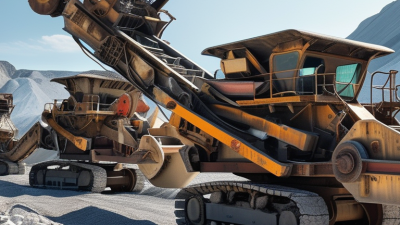
Choosing a Mining Jaw Crusher in 2026 is not just a matter of comparing price tags. Feed size, rock hardness, moisture, target output, and site access all affect the right choice. The USGS Mineral Commodity Summaries 2025 estimates worldwide mine production of copper at about 23 million metric tons in 2024. That scale helps explain why dependable primary crushing matters, though copper figures alone cannot predict the needs of a particular quarry or mine.
Common options include single-toggle and double-toggle machines, alongside mobile jaw crushers for sites that need to move between working areas. A single-toggle model may suit many fixed plants; double-toggle designs can be considered for demanding applications, but the best fit depends on the material and operating conditions. Check the maximum feed size, closed-side setting, rated capacity, drive power, liner availability, and maintenance access. Look closely at the details.
World Mining Data 2024 provides broader context on mineral production across countries and commodities. Such reports establish the scale of the industry, not a guaranteed crusher output. Real performance depends on feed gradation, operator settings, wear, and plant layout. A brochure may make capacity look simple. It rarely is. Buyers should compare supplier test data with site conditions and ask how quoted throughput was measured. I would also question any recommendation that ignores downtime, spare parts, or the cost of changing liners. No type wins everywhere. The right machine is the one that reliably handles your actual feed, fits your circuit, and can be supported where it works.
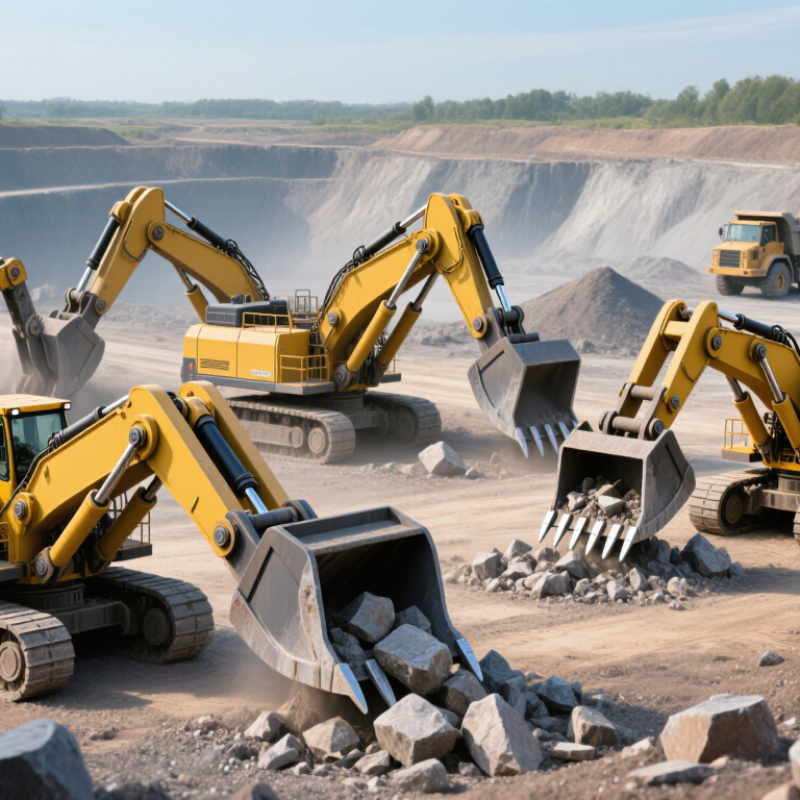
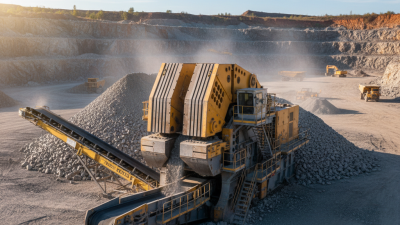
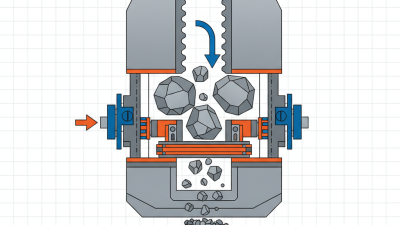
A mining jaw crusher reduces large, hard rock before further processing. It uses two heavy plates, called jaws, to apply compressive force. One jaw stays fixed; the other moves in a repeated forward-and-back motion. An eccentric shaft drives that movement, while a flywheel helps keep the cycle steady. Rock goes in. Gravity feeds material through the top opening, and repeated compression breaks it into smaller pieces. When the moving jaw retreats, fragments drop toward the discharge opening. The gap at the bottom, often called the closed-side setting, helps control product size.
In a mine, operators choose a crusher based on feed size, rock hardness, required capacity, and downstream equipment. A jaw crusher is often used for primary crushing because it can accept bulky, uneven feed. Still, it does not make every particle uniform; some oversize pieces may need another pass or a secondary crusher. Jaw plates wear, changing the gap over time, so inspections and setting checks matter. Dust, noise, and vibration also deserve attention around the machine. A practical selection starts with representative rock samples and realistic production targets, not catalogue capacity alone. That part is easy to underestimate.
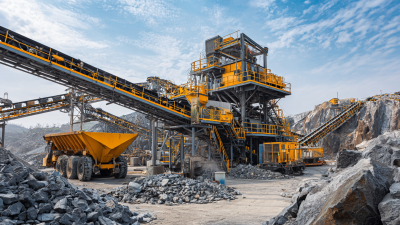
Mining plants commonly use single-toggle and double-toggle jaw crushers for primary size reduction. A single-toggle design uses one main eccentric shaft and a moving jaw with an elliptical stroke. Its compact layout and fewer moving parts suit many high-throughput plants. Double-toggle machines use a pair of toggle plates to drive the jaw. They can suit demanding, abrasive feeds, though their extra components need inspection. Neither design is automatically best. Ore hardness, feed size, and maintenance access matter more than labels.
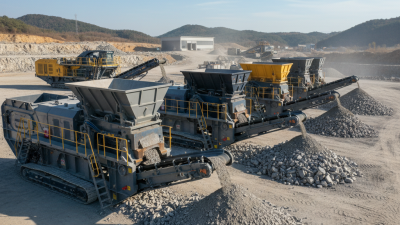
Fixed jaw stations handle steady, high-volume feed; mobile units help where faces move or haul distances change. The USGS Mineral Commodity Summaries 2025 estimates global iron ore mine production at about 2.5 billion metric tons in 2024. Its crushed-stone estimates also put U.S. output near 1.5 billion short tons. These figures show the scale of material handling, not how much jaw-crushed material each sector processes. A selection check should include the largest incoming rock, moisture, and the required downstream product size. Small oversights matter. Feed shape can cause bridging, and a crusher selected only by rated capacity may struggle in actual site conditions.
Ore hardness, abrasiveness, and feed size determine how a jaw crusher performs. Hard, blocky rock needs a robust chamber and enough motor power; abrasive silica-rich ore can accelerate jaw-plate wear. Wet, clay-heavy feed may stick to the plates or choke the discharge.
Wet feed changes everything. Check moisture and clay content across seasons, not only during a dry site visit.
Site logistics matter just as much. A remote pit may favor a simpler unit that crews can maintain with available lifting equipment and spare parts. Tight haul roads limit how large a crusher can be delivered. Soft ground calls for careful foundation design, while dust and water controls affect layout.
Measure it first. A practical assessment should record the largest expected feed, daily tonnage, product size, and hours available for maintenance.
The U.S. Geological Survey estimated U.S. crushed-stone production at about 1.5 billion tons in 2024 (Mineral Commodity Summaries 2025). That figure shows the scale of crushing demand, but it is not an ore-specific sizing rule. Treat it as context, then size equipment using site samples and trial data. I would be cautious about choosing from a single laboratory hardness result; real feed varies, and that uncertainty deserves room in the design.
When comparing mining jaw crushers for 2026, start with the feed opening and maximum feed size. The opening must accept the largest rocks from your site without frequent blockages. Check the recommended feed size, not just the opening dimensions. A broad opening is useful, but it does not guarantee steady output.
Next, compare the closed-side setting, or CSS, and the stated capacity. CSS affects product size and throughput; tightening it may reduce output and increase wear. Capacity figures depend on rock hardness, moisture, feed grading, and operating conditions. Ask which assumptions support the published rate. Specs can look tidy. A quarry rarely does.
Also review motor power, jaw plate material, adjustment method, and service access. Hard, abrasive rock can wear plates quickly, so replacement time and parts availability matter. Look at the machine’s weight and dimensions against your foundation, transport route, and available lifting equipment. Noise and dust controls deserve attention too. One detail is easy to miss: a crusher that fits the production target on paper may still be awkward to maintain on site. Request operating data for similar material, and treat unusually precise capacity promises with care.
Compare common jaw-crusher configurations by typical application and indicative operating ranges. Actual selection depends on rock properties, feed grading, operating conditions, and the complete plant design.
| Crusher Type | Typical Application | Indicative Feed Opening | Typical Throughput Range | Main Advantages | Specifications to Check |
|---|---|---|---|---|---|
| Compact or small stationary jaw crusher | Small quarries, pilot plants, and secondary crushing of pre-screened material | About 200–500 mm | About 5–100 tonnes per hour | Small footprint; comparatively straightforward installation; suited to lower feed volumes | Maximum feed size, discharge setting range, motor power, maintenance access, and available wear parts |
| Medium-duty stationary jaw crusher | Quarrying and mine primary crushing at moderate production rates | About 500–900 mm | About 50–400 tonnes per hour | Versatile size range; can handle a broad range of hard, abrasive rock when correctly configured | Feed-opening width and height, closed-side setting (CSS), capacity at the intended CSS, and drive power |
| Heavy-duty primary jaw crusher | Large mines and quarries processing run-of-mine rock | About 900–1,500 mm or larger | About 300–1,500+ tonnes per hour | Designed for large feed and high production; commonly used as the first crushing stage | Maximum lump size, chamber profile, peak-load handling, foundation loads, CSS, and liner life |
| Mobile jaw crusher | Temporary or moving sites, staged mine development, and on-site aggregate production | Commonly about 600–1,200 mm, depending on unit size | Often about 100–600 tonnes per hour, depending on configuration and material | Can reduce hauling of uncrushed rock; tracked or wheeled options support site mobility | Transport dimensions and weight, feed capacity, fuel or power requirements, setup time, and discharge height |
| Single-toggle jaw crusher | Common primary-crushing choice for many quarry and mining duties | Varies by frame size; compare the stated opening dimensions | Varies widely with crusher size, CSS, and material | Generally has a simpler mechanism and fewer major moving parts than a double-toggle design | Toggle and bearing design, nip angle, stroke, CSS range, lubrication needs, and suitability for abrasive feed |
| Double-toggle jaw crusher | Selected applications involving hard, abrasive rock and specific operating requirements | Varies by frame size; compare the stated opening dimensions | Varies widely with crusher size, CSS, and material | Uses a different toggle arrangement; may be considered where operating conditions and maintenance strategy suit the design | Mechanical complexity, wear-part availability, maintenance access, power demand, and verified capacity data |
How to compare specifications: Confirm the feed opening against the largest expected rock, then compare capacity at the required closed-side setting—not just a headline maximum. Check rock hardness and abrasiveness, feed moisture and grading, motor power, liner material and expected wear, installation or transport needs, and maintenance access. Throughput figures above are broad indicative ranges, not guaranteed performance; request application-specific capacity data and confirm the final selection with the equipment supplier.
When evaluating a mining jaw crusher for sale in 2026, start with the rock, not the brochure. Hard, abrasive ore can wear jaw plates quickly, while damp fines may bridge at the feed opening. Ask for the feed-size range, expected tonnes per hour, and required product size. Compare these figures with rated capacity under similar operating conditions.
Ratings alone mislead. Inspect the plates, toggle parts, bearings, and frame for uneven wear, cracks, or fresh repairs. If possible, review maintenance records and observe a loaded test. An empty start proves little.
Check whether the discharge setting is practical for your target product and whether parts can reach the mine site promptly. A crusher that fits the pit but sits idle awaiting service can become expensive. Measure installation space, power supply, and lifting access before committing.
Request energy and wear estimates, but treat them as estimates; ore conditions can change sharply. Compare total operating cost, not purchase price alone. Ask the seller to explain performance assumptions and record the agreed test conditions.
No checklist removes every risk, and I would still allow room for surprises.