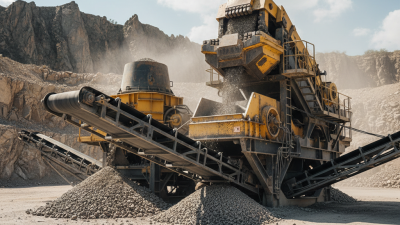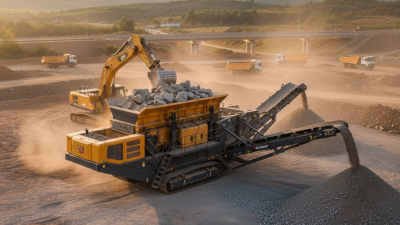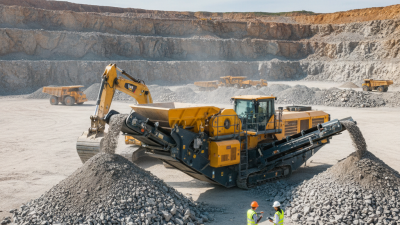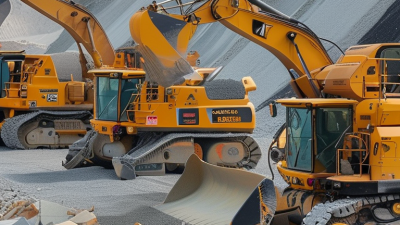
A Granite Crusher Machine is engineered to reduce large granite rocks into controlled sizes for roads, buildings, railway ballast, and concrete production. Its work begins when an excavator feeds rough stone into the primary crusher. The jaw plates then compress the granite until it fractures. Simple, but demanding.
Dr. Barry A. Wills, a widely cited mineral-processing author, wrote, “The aim of mineral processing is to produce maximum economic benefit from the ore.” That principle also applies to granite crushing. A profitable operation must balance product quality, power consumption, wear, and maintenance. A jaw crusher may handle the first reduction, while a cone or impact crusher produces finer aggregate. Screens separate oversized particles and return them for another pass.
Watch the feed carefully.
A practical operator checks vibration, oil temperature, belt alignment, and unusual noise throughout the shift. Granite is hard and abrasive, so liners, jaw plates, and blow bars gradually lose their working profile. Even a well-designed Granite Crusher Machine is not perfectly efficient. Moisture, uneven feeding, and poor screening can reduce output and create excess fines. This is where real experience matters. The best machine is not always the largest one; it is the machine matched to the rock hardness, required output, final product size, and site conditions. Understanding that relationship makes the crushing process clearer, safer, and easier to evaluate.
What Is a Granite Crusher Machine and How Does It Work?
Granite Crusher Machine: Definition, Purpose, and Main Functions
A granite crusher machine is heavy equipment designed to break large granite rocks into smaller, usable sizes. Granite is extremely hard and abrasive, so ordinary crushing equipment may wear quickly. These machines use compressive force, impact, or compression between rotating surfaces. In simple terms, they turn rough stone into controlled aggregate.
The machine usually works through several connected stages. A primary crusher receives large blocks from a quarry or demolition site. It reduces them into smaller pieces for further processing. A secondary or tertiary crusher produces finer material when required. Screens separate particles by size, while conveyors move the crushed granite between stages. Main functions include size reduction, shaping, grading, and continuous material transfer. Output may support road foundations, concrete production, drainage layers, or landscaping.
Practical operation requires careful adjustment. Operators monitor feed size, moisture, vibration, and product shape. Excessive feed can cause blockages and uneven crushing. Dust control and regular inspection also protect workers and improve reliability. From field experience, worn liners often change the final particle size before operators notice the problem. No setup is perfect. Granite hardness can vary within one rock mass, so settings sometimes need correction during production. A useful machine is not merely powerful; it must deliver stable output without wasting energy or damaging internal parts.

Granite crushing usually occurs in several stages. A primary jaw crusher accepts the largest blasted rocks, while secondary cone crushing and tertiary shaping reduce the material to smaller, more uniform sizes. The values shown are representative operating ranges for hard-rock crushing and may vary with equipment design, feed hardness, and required product specifications.
What Is a Granite Crusher Machine and How Does It Work?
A granite crusher machine reduces large granite rocks into usable aggregate for roads, concrete, and construction projects. Its work starts in the feed hopper, where a vibrating feeder controls the rock flow. This steady supply protects the crusher from sudden overloads. It also prevents uneven wear on internal parts.
The primary jaw crusher uses a fixed jaw and a moving jaw. Granite breaks when pressure builds between these two surfaces. A strong frame holds the crushing chamber in place. An eccentric shaft moves the jaw through repeated cycles. The motor drives this shaft through belts, pulleys, or a direct transmission system. Flywheels help maintain smooth movement during each crushing stroke. Replaceable jaw plates receive most of the impact. They need regular inspection because granite wears steel quickly.
After primary crushing, a cone crusher can produce smaller and more consistent particles. Its mantle moves against a concave surface, compressing the stone. In some applications, an impact crusher shapes the aggregate with fast-moving blow bars. A vibrating screen separates different sizes, while a conveyor returns oversized pieces for another pass. Dust suppression equipment improves visibility and protects nearby workers. Lubrication systems reduce friction, but poor maintenance still causes failures. I have seen fine dust hide early cracks around liners. That detail is easy to overlook. Operators should check vibration, temperature, product size, and unusual noise during every shift. Adjustments are rarely perfect on the first attempt.
A granite crusher machine reduces large, hard rock into controlled sizes for construction and road projects. The process begins when excavated granite enters a hopper. A vibrating feeder delivers the stones at a steady rate. This prevents sudden loading and helps protect the crushing chamber. It starts with a controlled feed.
The first stage usually uses a jaw crusher. Its moving plate compresses granite against a fixed plate, producing rough, smaller pieces. These pieces travel by conveyor to a secondary crusher, often a cone-type unit. Here, repeated compression creates a more consistent shape. A screen then separates the material by size. Oversized stones return for another pass, while acceptable material moves forward.
The process is not perfectly linear. Wet fines may cling to the screen, and poorly adjusted settings can increase dust or uneven particles. Operators check vibration, motor load, liner wear, and discharge size throughout the shift. Water sprays or enclosed transfer points can reduce airborne dust. A narrower discharge setting usually makes smaller products, but it can also reduce capacity. Balance matters. In practice, the best results come from matching feed size, moisture, machine settings, and the required final grading. A common mistake is chasing maximum output while ignoring product quality. Granite still needs inspection after crushing. Small changes in color, texture, or particle shape can reveal wear, contamination, or an unstable feed.
Granite crushers break hard rock into controlled sizes for construction, roads, and industrial projects. A feeder delivers raw granite into the crushing chamber. Moving plates, cones, or rotors apply pressure and impact until the material meets the required size.
Jaw crushers are common primary machines in granite quarries. Their large opening accepts irregular boulders, while a fixed plate and moving plate create compression. They produce coarse material for secondary crushing. Cone crushers handle the next stage. An eccentric mantle moves inside a concave bowl, creating consistent aggregate for concrete, asphalt, and railway ballast.
Impact crushers use fast rotating rotors and blow bars. They shape granite into more cubical particles, which can improve packing in road bases. Vertical shaft impact crushers are useful when a project needs manufactured sand or finely shaped aggregate. However, they can consume more wear parts when the granite contains abrasive minerals.
In practical operation, moisture, feed size, and rock strength change performance. A vibrating screen separates finished material and returns oversized pieces for another pass. A common mistake is feeding a jaw crusher unevenly. It can cause blockages and uneven wear. Regular inspections should check liners, bearings, discharge gaps, and dust controls. No crusher performs perfectly under every condition. Field experience shows that a slightly slower setting may deliver better particle shape and lower maintenance costs.
A granite crusher machine reduces hard rock into usable sizes through compression, impact, or both. A feeder delivers granite steadily, while the crushing chamber applies controlled force. Screens then separate the material by size. In practice, output depends on more than machine capacity. Granite hardness, moisture, and natural fractures can change the crushing result within hours.
Feed size is a major factor. Oversized rocks may reduce throughput and increase wear on jaw plates or blow bars. A steady feed usually produces better particle shape and fewer blockages. Too much fine material can cushion the crushing force, lowering efficiency. Moisture also matters. Wet granite may stick to screens and form buildup, especially when clay is present. Screen openings, discharge settings, and rotor or jaw speed must match the required product size. A tighter setting can create more fines, but it may increase power use and wear. That trade-off is easy to underestimate.
Tips: Inspect liners, belts, and screen panels during every shift. Remove packed material before it hardens. Keep a simple record of feed size, moisture, power use, and hourly output. This reveals patterns that visual checks often miss. Operators should also adjust the feed gradually, not suddenly. Small changes are safer. Real sites are rarely perfect, and even experienced teams may need to revise settings after testing the finished aggregate.
| Data Dimension | Granite Crusher Information | Typical Range or Example | Effect on Performance and Output |
|---|---|---|---|
| Machine Definition | A granite crusher is a heavy-duty machine that reduces quarried granite into smaller sizes for aggregates, road base, concrete, asphalt, and manufactured sand. | Primary, secondary, and tertiary crushing stages | Multiple stages improve size control and reduce the load on each individual crusher. |
| Working Principle | Granite is broken by compression, impact, or a combination of crushing forces. The material enters through a feed opening, is reduced inside the crushing chamber, and exits through a controlled discharge opening. | Compression or impact-based size reduction | The selected crushing principle influences product shape, energy use, wear rate, and capacity. |
| Primary Crusher | A jaw crusher or gyratory crusher commonly performs the first reduction of blasted or quarried granite. | Feed size often up to approximately 1,000 mm, depending on equipment design | Primary crushing creates a manageable feed size for secondary equipment and determines the efficiency of the complete plant. |
| Secondary Crusher | A cone crusher or impact crusher further reduces the material after primary crushing. | Common output range: approximately 20–100 mm | Secondary crushing improves reduction ratio and prepares material for final sizing. |
| Tertiary Crusher | A fine cone crusher, vertical shaft impact crusher, or similar unit produces smaller aggregate and manufactured sand. | Typical final products: 0–5 mm, 5–10 mm, 10–20 mm, and 20–40 mm | Fine crushing improves product grading but generally requires more energy and may increase wear. |
| Common Capacity | Capacity depends on crusher type, feed size, discharge setting, material properties, and plant configuration. | Approximately 50–500 tonnes per hour for many aggregate applications | Higher nominal capacity does not always result in higher actual output if the feeding or screening system is undersized. |
| Feed Size | Feed size is the largest dimension of the granite entering the crusher and should remain within the equipment's design limits. | Oversized rock can cause bridging, blockages, and uneven crushing | Consistent feed size reduces interruptions and helps maintain stable throughput. |
| Granite Hardness | Granite is generally a hard, abrasive igneous rock containing minerals such as quartz, feldspar, and mica. | Typical Mohs hardness of major granite minerals: about 6–7 | Harder and more abrasive feed usually lowers wear-part life and may increase power consumption. |
| Moisture Content | Moisture can cause fine particles to adhere to surfaces and may reduce material flow through the crushing and screening circuits. | Lower moisture is generally easier to process; the effect depends on fines content | High moisture may reduce screening efficiency, increase clogging, and lower effective output. |
| Crusher CSS | Closed-side setting, or CSS, is the smallest distance between crushing surfaces at the discharge point. | Smaller CSS produces finer material; larger CSS produces coarser material | Reducing CSS can increase fine product generation but may reduce capacity and increase power demand. |
| Reduction Ratio | The reduction ratio compares the feed size with the product size and indicates how much the material is reduced in one stage. | Common stage ratio: approximately 3:1 to 8:1, depending on crusher type and application | Excessive reduction in one stage can increase recirculating load, wear, and energy consumption. |
| Product Gradation | Product gradation describes the distribution of particle sizes in the crushed material and is controlled by crusher settings and screens. | Examples: 0–5 mm manufactured sand, 5–10 mm, 10–20 mm, and 20–40 mm aggregates | Accurate gradation improves product quality and reduces unnecessary recirculation. |
| Particle Shape | Cubic and angular particles are often preferred for concrete and asphalt because they can provide better interlocking than excessively flaky particles. | Impact and properly operated cone crushing can improve shape in suitable applications | Good particle shape can increase product value, while excessive flaky material may limit end-use suitability. |
| Feed Rate | The feeder should deliver a steady and evenly distributed stream of granite to the crusher. | Stable feed without surges or prolonged underfeeding | Even feeding improves chamber utilization, product consistency, and hourly output. |
| Screening Efficiency | Vibrating screens separate crushed granite into specified sizes and return oversize particles for further crushing. | Efficient screening minimizes unnecessary recirculating load | Poor screening can make a correctly adjusted crusher appear inefficient and reduce total plant capacity. |
| Wear Parts | Jaw plates, cone liners, blow bars, and other wear components gradually lose their designed profiles during operation. | Inspection and replacement based on condition and operating hours | Worn parts can reduce crushing efficiency, increase energy use, and produce irregular product sizes. |
| Power Demand | Power demand is affected by granite hardness, feed size, reduction ratio, crusher setting, moisture, and throughput. | A complete plant may require tens to several hundred kilowatts, depending on capacity and stages | Operating near the designed load generally improves energy efficiency, while overloads can cause trips and damage. |
| Dust and Noise Control | Crushing and screening generate dust and noise, especially at transfer points and during dry processing. | Water sprays, enclosure systems, extraction, barriers, and routine housekeeping | Effective controls improve working conditions, equipment reliability, and regulatory compliance. |
| Operational Monitoring | Important indicators include feed rate, motor load, vibration, bearing temperature, discharge gradation, and recirculating load. | Continuous checks combined with scheduled inspections | Early detection of abnormal conditions helps prevent unplanned downtime and output loss. |
| Output Calculation | Actual output can be estimated by multiplying operating capacity by effective operating time and deducting stoppages and process losses. | Effective output = Nominal capacity × Utilization rate | For example, a 200 t/h circuit operating at 80% utilization produces approximately 160 t/h on average. |
Note: Capacity and operating ranges are typical industry estimates. Actual performance varies with crusher design, granite properties, feed preparation, settings, maintenance, screening, and site conditions.